
2.1 Welcome
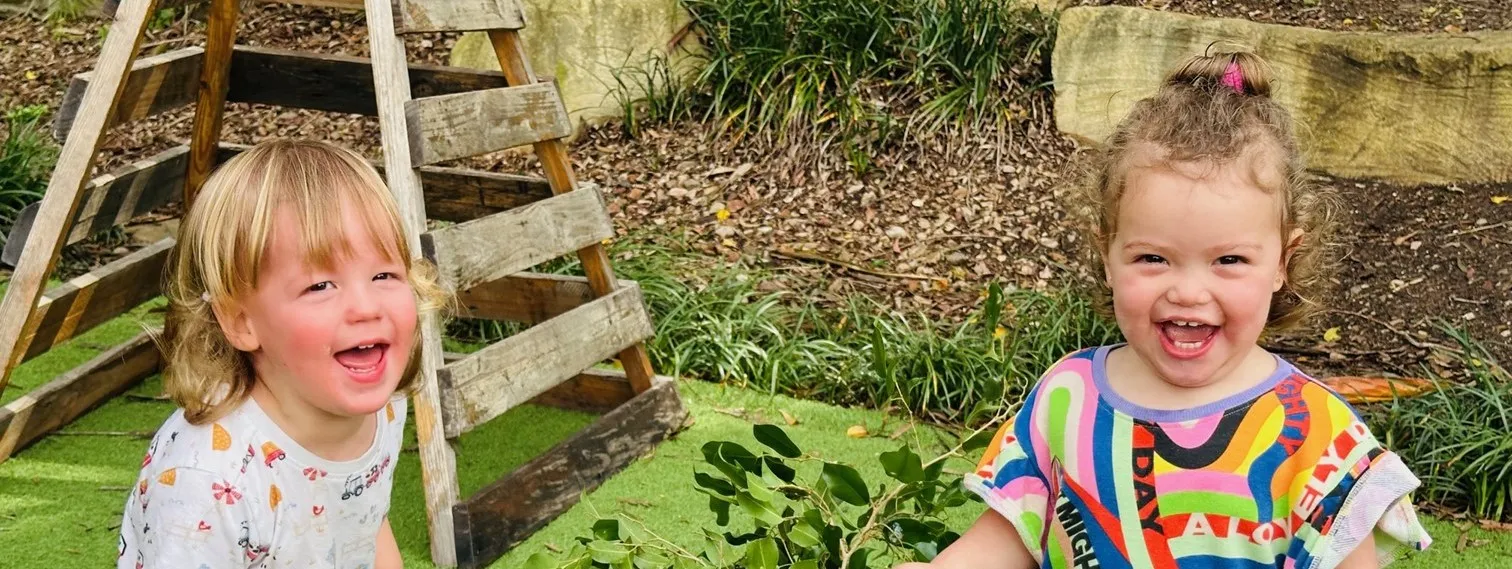
Welcome to John Paul College Early Learning Centre (ELC). The ELC provides a caring, safe and secure environment for children. Throughout their early years, children's right to experience the joy of childhood is fundamental, and learning is promoted through play and intentional experiences and interactions. Children are viewed as competent, curious, natural researchers who are full of knowledge and potential and are interested in connecting to the world around them.
At JPC, we believe the potential for the children in our care is unlimited. Our child-focused approach encourages children to be active participants in their learning environment as they discover, create and imagine many possibilities.
2.2 Educational Philosophy
Image of the Child
At John Paul College Early Learning Centre, we believe that all children have rights - a right to communicate, a right to be heard, a right to explore, to be cared for, and a right to learn.
We believe children are capable, competent, creative learners, full of potential, and curious about the world around them. We believe children are explorers, enquirers, innovators, and independent thinkers. The children have a voice in our program that is valued and sought after.
We value play, fun, and emotions and feelings in our early learning program. We promote excitement for learning by recognising and responding to a child's individual ideas through play and emergent and intentional experiences and interactions.
Our program values the importance of building strong relationships and partnerships with children and their families based on trust, respect, and open communication. We strive to engage in shared decision-making with the children and their parents, recognising and embracing the value each family brings to the rich tapestry of culture within our community.
Educational Program
We are committed to providing an experience-rich environment where children have uninterrupted time, space, and opportunity to explore and discover, expressing themselves in diverse ways.
Our engagement with the great outdoors empowers children to connect with nature, facilitating their social, spiritual, physical, intellectual and emotional learning. We celebrate and document their learning to share with them, their families, and with other Educators.
We value a program that is accessible and meaningful for all children, which includes supporting children and families with diverse abilities and alternative perspectives. We extend this mindset of inclusion, respect, and acceptance to visitors, students, team members, and the wider John Paul College community.
We aim to provide a program that embeds sustainable practices to develop respect and appreciation for nature and the world around us. We value the support and engagement with our families to promote sustainable practice at home and in the community.
A Community of Learners
We acknowledge and value the traditional owners of the land our centre is situated on as being the Yugambeh country. We recognise and respect the unique place of Aboriginal and Torres Strait Islander people, their culture and language, as this Nation's first peoples. We pay our respects to elders past, present and emerging by embedding learning and understanding of Indigenous peoples' culture and traditions within our program.
We recognise that our Early Learning Centre is part of the wider community, living and learning within John Paul College. We believe that it is important for children, families and educators to feel a sense of belonging and connection to their community. We value reaching outwards, forming connections within the broader community and taking an active interest in what is happening around us.
As a team of Educators, we respect each other's views, values, cultures, and beliefs without judgment. We value teamwork and positive connections, and we strive to build a sense of belonging for every member of our team. We are a family.
We are committed to reflective practice. We value the role of reflection, research, and collaboration to inform decision-making and practice. We engage in professional learning and dialogue to continually enhance the experiences for children and their families.
Program Goals
The Program will:
- value the individuality of each child
- stimulate each child's natural desire to learn
- enhance each child's development of their social, emotional, physical, spiritual, language and cognitive development
- engage in effective two-way communication between parents/caregivers and the Early Learning Centre Educators and team, recognising families as the most important people in children's lives
- engage warm and professional Early Childhood Educators that will make a lasting difference in your child's life.
2.3 Non-discriminatory Access Policy
Our program aims to represent the diversity of the lives of the children, families, staff and community of the ELC. Our program reflects our commitment to human rights, individual dignity, multiculturalism, social justice, and diversity of religious beliefs.
2.4 Early Years Learning Framework
Our program is implemented through the 'Emergent Curriculum' philosophy. The program follows the Early Years Learning Framework for Australia (EYLF V2.0) and embraces the inclusive vision that 'all children experience learning that is engaging and builds success for Life.' (EYLF 2009). Throughout your child's year at the ELC, their right to experience the joy of childhood is fundamental. Learning is promoted through play and emergent and planned learning experiences and interactions.
The Early Years Learning Framework identifies five broad outcomes for children:
- Children having a strong sense of identity
- Children are connected and contribute to their world
- Children have a strong sense of wellbeing
- Children are confident and involved learners
- Children are effective communicators.
The children's interests provide a platform for the daily program, which is encouraged to be spontaneous rather than structured and predetermined. This child-focused approach encourages children to be active participants in their learning environment.
'Once children are helped to perceive themselves as authors or inventors, once they are helped to discover the pleasure of inquiry, their motivation and interest explode.'
Loris Malaguzzi (Founder of the Reggio Emilia Schools in Italy)
The primary means of learning in early childhood is through play. Play is purposeful and goal-centred. To children, play is important and is their 'work'. Each day a variety of experiences will be provided in which the children can actively become involved by responding to interests within their play environment.
Skills and concepts are experienced through all aspects of our program. Very young children can understand and learn basic concepts through play. As children progress and mature, additional skills and concepts are introduced.
All children have their own interests and growth patterns. We embrace this as children learn through experiences that are meaningful to them. The emergent curriculum encourages children to learn from a social perspective as individual and common interests are extended to form 'projects'. Children participate in these as a small or large group, such as building a small city using various resources, props, construction equipment, and other materials.
The ELC provides a program that caters for children as 'a whole' and appreciates that 'readiness' for any given task has its roots in the biological/maturational make-up of the child. The emergent curriculum philosophy promotes educational programs for children based on their current development, not on what one thinks it ought to be.
Based on our observations of the children's development and interests, the program is devised for the individuals and the group as a whole. These experiences aim to support a child's level of development and nurture and encourage progression to the next stage of maturation. The learning environment enables unexpected happenings that capture the children's interest to be explored and extended.
2.5 Documentation
Documentation is a powerful tool for viewing the learning processes of both adults and children. Making learning, living and thinking visible immediately becomes a shared encounter: 'A collection of traces to be used at the end of the process for reflective purposes' (Rinaldi 2003). The documentation allows children and adults to revisit their thinking either together or on their own.
Individual Learning Journals
At John Paul College Early Learning Centre, our professional staff strive to make your child's journey visible to you by capturing play and learning in their journals. Learning Journals are more than a memory or keepsake of your child's time at the ELC. These learning journals are a collaborative effort and will be available to families and children.
They give children an opportunity to revisit and reflect on past experiences, record their learning, and help our Educators ensure your child's time with us is full of wonder and possibility.
You are encouraged to be a co-participant in three-way communication (i.e. child, parent and Educator) and contribute photos, stories, artworks or any memorabilia that tells a story about your child's life and learning journey.
Documenting the Curriculum
In addition to individual Learning Journals, Educators will reflect the Early Years Learning Framework through various documentation methods, including observations that focus on social interactions, relationships, dispositions, and learning processes; stories and conversation transcripts; and drawing, painting, and creative arts. Photographs and videos of interactions, constructions and group projects, and family contributions are also used to document learning.
Through these records that incorporate the voices of children and parents, we can visualise the thinking of both children and adults. The variety of documentation methods allows us to capture all of children's languages of expression.
Planning is a continuous and collaborative process. Planning happens within the program as children and adults create opportunities for living and learning through the spontaneous and unpredictable encounters of the here and now in every context. Our Educators will support children to become involved in what is interesting and meaningful to them.
Parents and guardians are invited to discuss the activities and experiences of our programs and the goals to be achieved through our curriculum.
Please ask your child's Educator or the Educational Leader for more detailed information about your child's learning and development and how we collaborate to foster your child's learning opportunities.
2.6 Guiding Children's Behaviour
It is our policy that all children and staff have the right to a safe environment.
At John Paul College Early Learning Centre, we establish an environment that supports their communication and interaction with others. Our goal is to develop children's self-control and responsible behaviour, and to support them as they learn to face the challenges and obligations of living. Staff use role modelling, directional language, guidance, and behaviour-teaching processes to encourage children to understand and choose appropriate behaviour.
Guidance is an important concept in behaviour. The goal of the guidance process is for the adult to interact with the child in a caring and understanding way, empowering and enabling the child to develop self-respect, self-responsibility and self-control. Staff continually engage with children to role model sharing and taking turns, entering and responding to play, asking for toys, etc.
Sometimes physical contact occurs between one or more children. Depending on the age group, staff use strategies such as firm, straightforward language or more open-ended language to encourage the child to think about the child who has been hurt… 'How do you think the child you hurt is now feeling?' 'What could you do next time to solve the problem?' Children are expected to take responsibility for their actions, which often looks like sitting with the child for a while to comfort them, holding ice on a bump, or helping rebuild something that was knocked down. The ELC also provides sensory and quiet areas where children who have physically hurt another child may use to help them calm down. This allows an Educator to spend time with the child talking about what happened and how their actions affected another child.
When staff observe challenging behaviours, they make notes for the child's records to obtain a clearer picture. Staff try to establish reasons for a particular behaviour and plan experiences that will assist the child to:
- meet their needs in other ways
- learn the appropriate behaviour.
Families are consulted about any incidents or concerns regarding their child's behaviour. Families are encouraged to collaborate with teachers to promote and guide positive behaviour.
Biting
Biting is not an uncommon action in young children who may be unable to communicate their feelings. Staff will manage this behaviour by actively engaging with children to prevent incidents. If biting occurs, an Educator will remove the child from the situation and help them find another outlet for their feelings. The child who has been bitten will be comforted and any necessary first aid administered.
When biting occurs, it is understandably very distressing to parents. The parents of a child who is bitten will probably feel angry. On the other hand, the parents of a child who has been biting may feel uncomfortable. Please remember that this is a natural phase of development in some children and through our careful supervision and active engagement with children, these incidents will be kept to a minimum.
2.7 Early Learning Centre Staff
Head of Early Education
The ELC is managed by the Head of Early Education, who holds a Bachelor of Teaching (Early Childhood Education) qualification. The Head of Early Education is responsible for ensuring the ELC provides an educational program and high-quality care for each child. The Head of Early Education is also responsible for the overall administration of the ELC and maintaining health and safety standards.
The Head of Early Education also liaises with parents and College staff to ensure effective communication processes are in place.
Lead Educators and Educators
Each of the five groups in the ELC is staffed by qualified Educators. All Lead Educators have their Diploma in Children's Services. Our Educators have either obtained their Diploma or are currently studying for their Diploma in Early Education and Care.
The Lead Educator leads the group and, together with the Educators, provides care and education tailored to each child. All Lead Educators are allocated non-contact time to prepare their educational programs. Some Lead Educators are updating their qualifications to a Bachelor of Teaching (Early Childhood).
Additional staff
Additional staff include:
- Administrative Assistant who undertakes the daily administration of the ELC and handles the receipting of fees.
- Educational Leader who mentors and guides the Educators in facilitating the Educational Program.
- ELC Cook who prepares nutritionally balanced meals for the children.
- Float staff members to support break times and lunchtime relief across the ELC.
- Cleaners who also ensure hygiene standards are maintained nightly so children always have a pleasant environment in which to operate.
- The Service supports School-based Trainees studying their Certificate 3 in Children's Services. However, these trainees are additional staff and are not part of the staff-to-child ratios.
Support Staff Services
To support the ELC, we have a Registered Nurse, a Diverse Learning Coordinator, and a School Counsellor on campus. A Speech Pathologist and an Occupational Therapist are also available.
Staff Professional Development
Our ELC believes that ongoing staff professional development is essential for high-quality practice. Professional development gives staff the opportunity to learn new skills and challenge current practice. We actively promote and support the ongoing professional development of all staff members by encouraging their attendance at courses, seminars, workshops and conferences. Staff are also encouraged to develop a continuing approach to their own professional development.
2.8 Volunteers / Students
Occasionally, new faces will be in the ELC when volunteers and students visit to gain experience in the Early Childhood Education and Child Care field. These new faces may also include relief staff who are sometimes present at the ELC.
Every visitor meets with the Head of Early Education and is provided with guidelines to ensure no disruption to the children's daily routine. These visitors will be supervised by a Lead Educator and will not be left alone with the children. We will inform parents about visitors attending the ELC. The recruitment and management of volunteers within the ELC are governed by the John Paul College Volunteer Management Policy and the John Paul College Working with Children Policy.
Before volunteers can be engaged in Regulated Employment, they must obtain and hold a current, valid Working with Children Clearance/Blue Card.